Blog
The kitchen: designing a room that welcomes and works
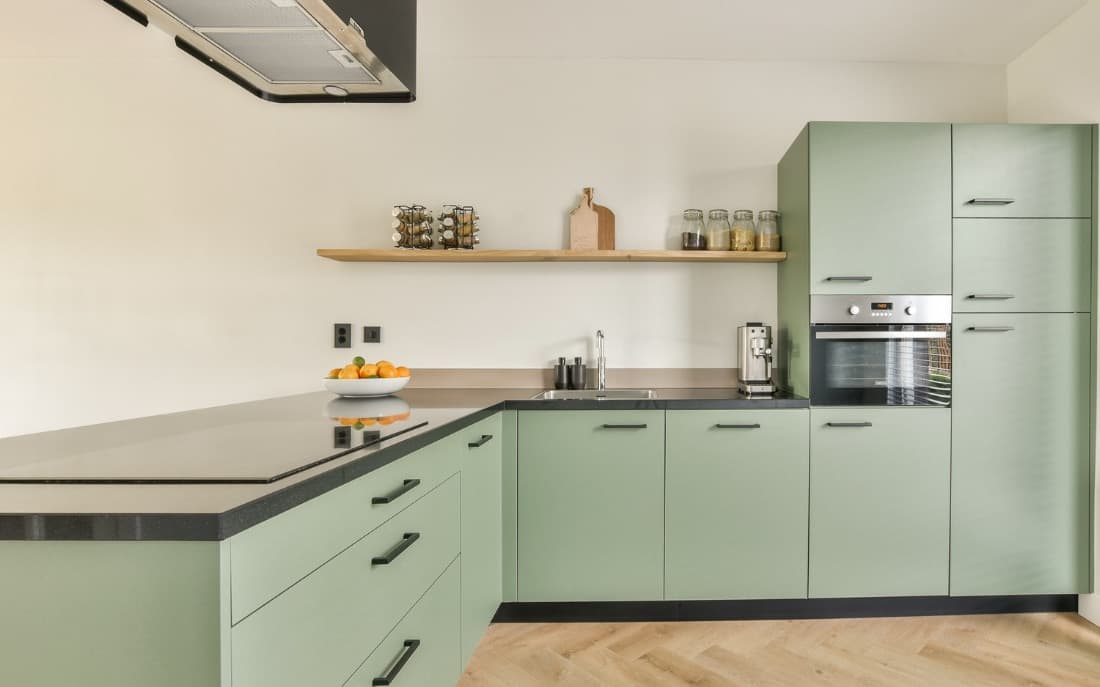
The kitchen is increasingly the heart of the home: no longer just a technical space in which to prepare meals, but a place of life, exchange and sharing. Practical gestures, family moments, hospitality and design coexist in a single room. Designing a kitchen that welcomes and functions means working on different levels: flow, materials, comfort, atmosphere. It is a task that requires attention not only to aesthetics, but also to everyday life.
Flow as a common thread
When moving in the kitchen, every step counts: from the aperitif to cutting the ingredients, from near the sink to the cooking area. This is why good design starts from flow: the organization of stations - sink, hob, refrigerator - and passage spaces.
A well-designed kitchen avoids unnecessary intersections, allows more people to work comfortably, and does not hinder conviviality. If the kitchen opens onto the living room, the flow becomes even more important: there must be visual and functional continuity between two interacting environments. Precisely for this reason, the 2025 trends highlight the importance of "open" solutions, natural materials and intelligent storage solutions. Nordiska Kök+1
Materials and finishes that last… and that welcome
The choice of materials in the kitchen cannot be based only on beauty: they must resist intense use, water, heat and movement. But they can also be welcoming components. Wood, for example, transmits heat; natural stone gives solidity; matte surfaces dampen reflections, making the environment more human.
The latest trends focus precisely on "real" materials, natural textures and finishes that never go out of fashion. howdens.com+1
A welcoming kitchen can also be recognized by touch: a handle that grips well, a worktop that invites, a seat that invites you to stay. Function is accompanied by the experience of living.
How to work with solids and voids
The balance between what is there and what is missing is a question of proportions and intention. It's not about leaving free spaces at random, but about building a visual rhythm.
An example: a wall completely covered with paintings can be beautiful if balanced by a free wall next to it. A large dining table gains strength if there is enough space around it to breathe. An important sofa becomes the protagonist when it is not suffocated by too many other furnishings.
The trick is to think of empty spaces as active elements of the project, not as areas “to be filled in the future”.
Conviviality and versatility
The welcoming kitchen also speaks of conviviality. It is not just the place where food is prepared, but where it is shared: quick breakfasts, chatter around the island, unexpected guests. Designing so that the kitchen works means providing spaces for living, not just for working.
A central island with stools, a peninsula that separates but invites, a snack counter: all elements that transform the kitchen into a meeting point. And that's not all: the lighting, the acoustics and the seating must be designed so that the kitchen remains welcoming even after the meal has been prepared.
Invisible technical comfort
A good functional kitchen hides a lot of technology: pipes, electrical sockets, ventilation, smart systems. But quality can be seen — or rather, not seen — in solutions that don't get in the way and that last over time.
Current trends show a growing interest in integrated appliances, camouflaged furniture, "secret" storage systems. Real Simple+1
This also contributes to the welcome: an orderly, well-designed environment, where the function is not visible but perfect.
Atmosphere and emotional details
Finally, designing a kitchen that welcomes means thinking about emotion. The choice of colour, light and small accessories makes the difference. A kitchen can be reassuring, bright, dynamic: depending on the lifestyle it brings with it. Currently we see warm palettes, natural shades and deep colors that move away from sterilized white. wsj.com A kitchen made for living must be a place to feel good - where the taste is not only that of the food, but also of the environment.
The kitchen that welcomes and functions is not a dream, but a concrete project. It lies in the ability to combine flow, materials, conviviality, technique and atmosphere. And when all this is designed well, the kitchen truly becomes the place in the house where life takes place - between gestures, conversations, simple and special moments.