Blog
Domestic acoustics 2.0
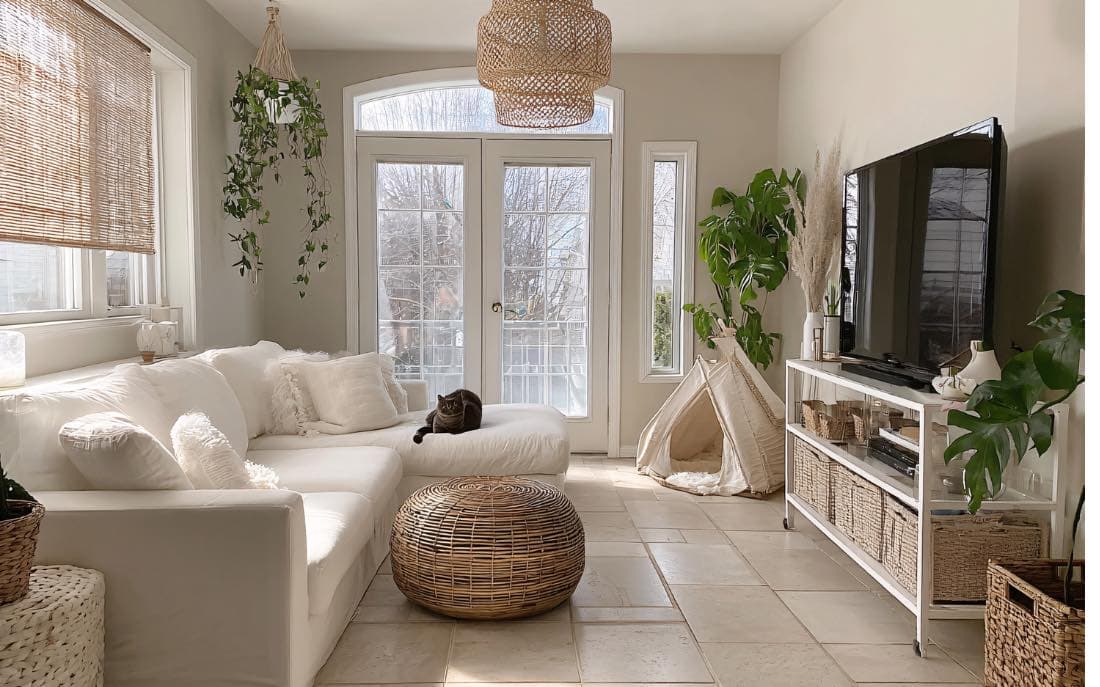
How to live well in homes with open spaces, children, animals and noise
In recent years, interior design has enthusiastically embraced the trend towards open spaces, multifunctionality and sharing of environments. Open spaces have become synonymous with contemporaneity: more light, more connection between people, more fluidity. But with these characteristics, often, also comes an invisible… and very audible challenge: acoustics.
We live in more dynamic, more lived-in, more "noisy" homes. Children playing, dogs wagging their tails, washing machines working, smart working meetings and dinners with friends. Sound, in all of this, becomes part of the living experience. But if it is not managed, it can become a nuisance.
Sound as part of living well-being
We are used to thinking about spaces in visual terms: colors, materials, lines. But the sensorial experience of a house is not limited to sight. Even what we feel – or don't feel – influences our mood, our concentration, our ability to relax.
An environment that is too noisy or echoey can make conversation difficult, increase stress levels and create discomfort even in moments of relaxation. For this reason, designing taking acoustics into account is not a luxury for the few, but a quality of life choice.
Because open spaces amplify the problem
Open environments, often lined with hard materials such as concrete, glass or metal, offer very few natural obstacles to sound. The demolished walls, high ceilings, continuous floors and the absence of doors create "living" acoustics: the sounds bounce, add and amplify.
What may seem like clean and modern architecture risks, if not carefully designed, becoming an echo chamber where every step, word or domestic noise is multiplied.
How to improve the acoustics in your home
The first step is to become aware of the impact that surfaces, the arrangement of furniture and materials have on sound quality. Then, you can intervene with intelligent design choices, even in small details.
1. Choose “sound-absorbing” materials
Not everything that furnishes is “sonic”. Fabrics, for example, are real allies against reverberation. Heavy curtains, carpets, upholstery, cushions and natural fabric coverings absorb part of the sound waves. Natural materials such as wood and cork also help break up the echo, adding visual and acoustic comfort.2. Play with volumes and heights
The arrangement of volumes in space can influence how sound moves. A wall bookcase, for example, is perfect for "breaking" the bounce of sound waves, as well as having a decorative role. Lowering the ceiling with strategic false ceilings can also improve acoustics, especially if sound-absorbing panels are used.3. Use acoustic panels integrated into the design
Today there are decorative acoustic solutions: wall panels with contemporary design, geometric shapes or colored felt coverings that become part of the furniture. Perfect for empty walls, corridors, dining rooms or multifunctional rooms, they offer performance and style in a single element.4. Separate without closing
In cases where you want to contain the sound in some areas (for example for smart working or the sleeping area), you can insert light dividing walls, windows with curtains, sliding panels or double-sided bookcases. They do not interrupt the light or the perception of continuity, but help to limit the diffusion of sounds.5. Consider even small spaces
Not just open space. Even laundries, blind bathrooms, basements and hallways can become "sounding boards" if neglected. A carpet, a cork-decorated wall or a well-designed wardrobe can help dampen noise in these spaces too.Acoustics and lifestyles
Acoustics is not just a technical issue. It is a reflection of our habits. A family with small children will have different needs than an adult couple working from home or someone sharing the house with an animal.
During the design – or renovation – phase it is important to ask yourself:
- Where do I spend most of my time?
- Where do I need silence or concentration?
- Where is the most noise created?
- Are there times of the day when sound becomes a problem?
These questions help to create a domestic sound map, useful for deciding where to intervene and with which instruments.
When you need the support of a designer
Often there is no need to revolutionize the house. Sometimes just a few targeted interventions are enough to obtain a quieter and more comfortable environment.
An expert designer can help you read the space not only in plan, but also in volume.
To suggest invisible but performing materials. To integrate the acoustic solutions into the beauty of the environment.
The future of living comfort
In a world where we work from home, stream music, watch movies in the living room, entertain friends in the kitchen, and raise kids in the living room, sonic comfort is part of smart design.
It's no longer just about insulating the walls: it's about creating harmonious environments, where every noise finds its place and its measure.
The house is not a silent set, but a living place. Making it "sound good" means designing spaces that welcome, accompany and respect our way of living.